Walking or driving around Likweti, it is often the brightest flashes of colour that catch your eye first. A butterfly drifting past, a tiny frog clinging to a reed, or a boldly patterned insect basking in the sun. These vivid colours are not only beautiful. They are part of one of nature’s most fascinating communication systems.
That system is called aposematic colouration, and its nature’s clever way of saying, “Think twice.”
What is aposematic coloration?
Aposematic coloration is a survival strategy used by certain animals to signal that they are unpleasant to eat, toxic, bad tasting, or able to defend themselves. Instead of blending in, these species stand out and make themselves easy to notice.
Bright reds, yellows, oranges, blacks and bold patterns act like a billboard in the bush saying I am best admired from a distance. Over time, predators learn to recognise these colours and avoid them, which helps keep the balance in nature.
Aposematic coloration is found all over the animal kingdom. Think of bees and wasps with their yellow and black stripes, the fearless honey badger, or the sharp quills of a Cape porcupine. Different species share the same idea, using clear and honest signals to communicate with the world around them.
What makes this so fascinating is that it is a language shared across the wild. Predators in the bushveld do not need to test every animal. Once they have had one unpleasant experience, the colors do the talking.
The bushveld’s colourful characters
Here in the Lowveld, we are lucky to share our space with some wonderful examples of this clever design.
The Koppie Foam Grasshopper (Dictyophorus spumans) is one of the most striking. With its bold black and red colouring, it looks like something straight out of a Marvel comic. Those dramatic colours serve a real purpose. When threatened, it can release a foul smelling toxic foam that quickly convinces predators to look elsewhere.

Floating gently through the air is the African Monarch Butterfly (Danaus chrysippus). Its warm orange wings edged in black may look delicate, but this butterfly stores toxins from the plants it eats as a caterpillar. Birds that try to snack on one soon learn to leave monarchs alone. Even more fascinating is that some other butterfly species copy its colors and patterns to benefit from the same protection, proving just how powerful this natural signal really is.

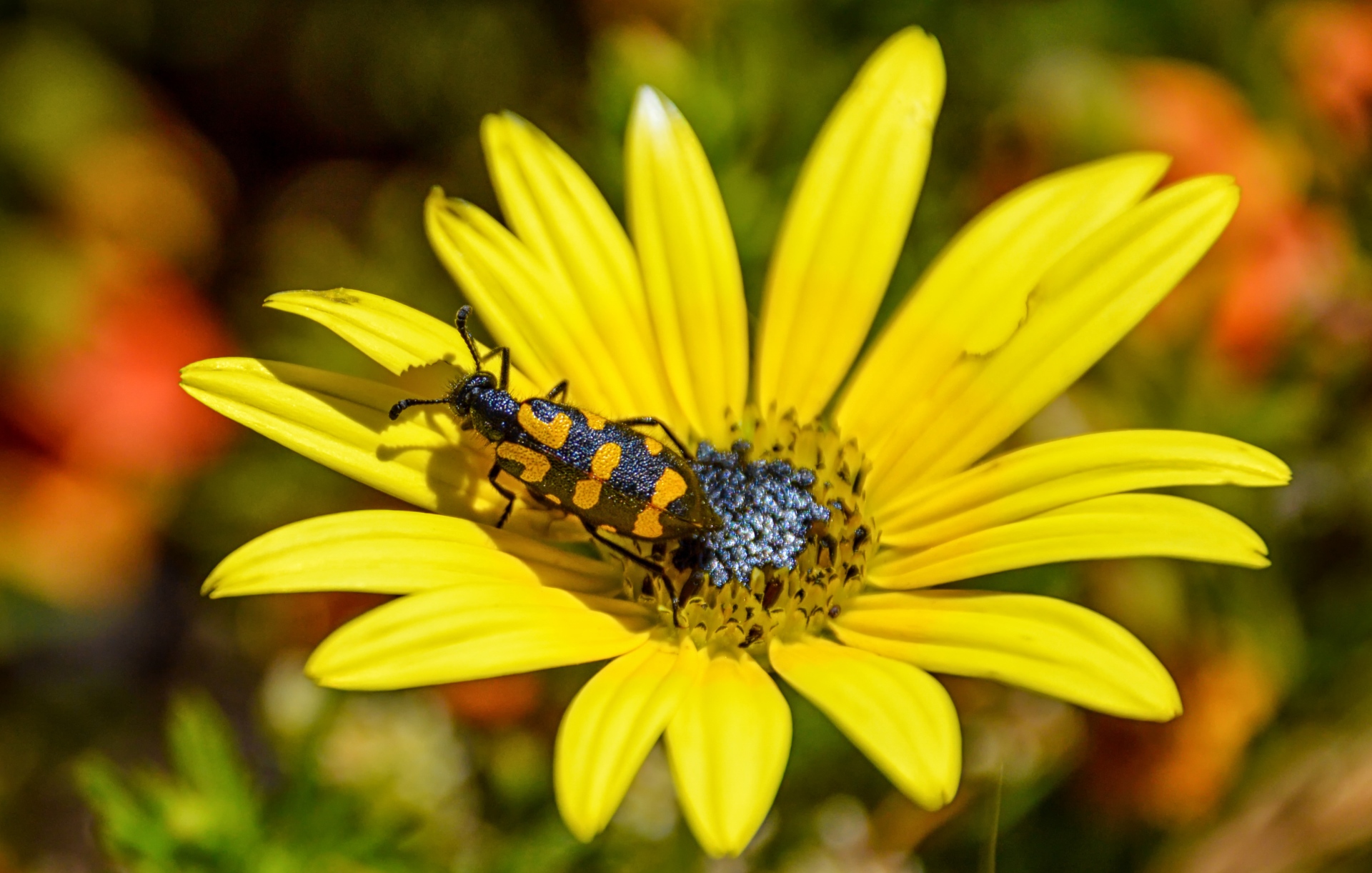
Closer to the ground, the Spotted Blister Beetle (Ceroctis capensis) is another tiny but powerful example. Its spotted, high contrast coloring signals that it carries chemicals that can irritate the skin and discourage predators from making it a meal.
Then there is the marble like Painted Reed Frog (Hyperolius marmoratus). These little frogs are like tiny works of art, with bold patterns that vary widely between individuals. Some have stripes, others spots or marbled markings in shades of brown, green, yellow, black and cream. During the day they may appear more muted to help them stay cool, but at night their striking colours and patterns can really stand out at the water’s edge. These frogs are not poisonous to people, but their busy patterns might just make a predator think twice before reaching for a quick snack, and the males fill the bushveld air with a chorus of sharp, bell like calls that help them attract mates.

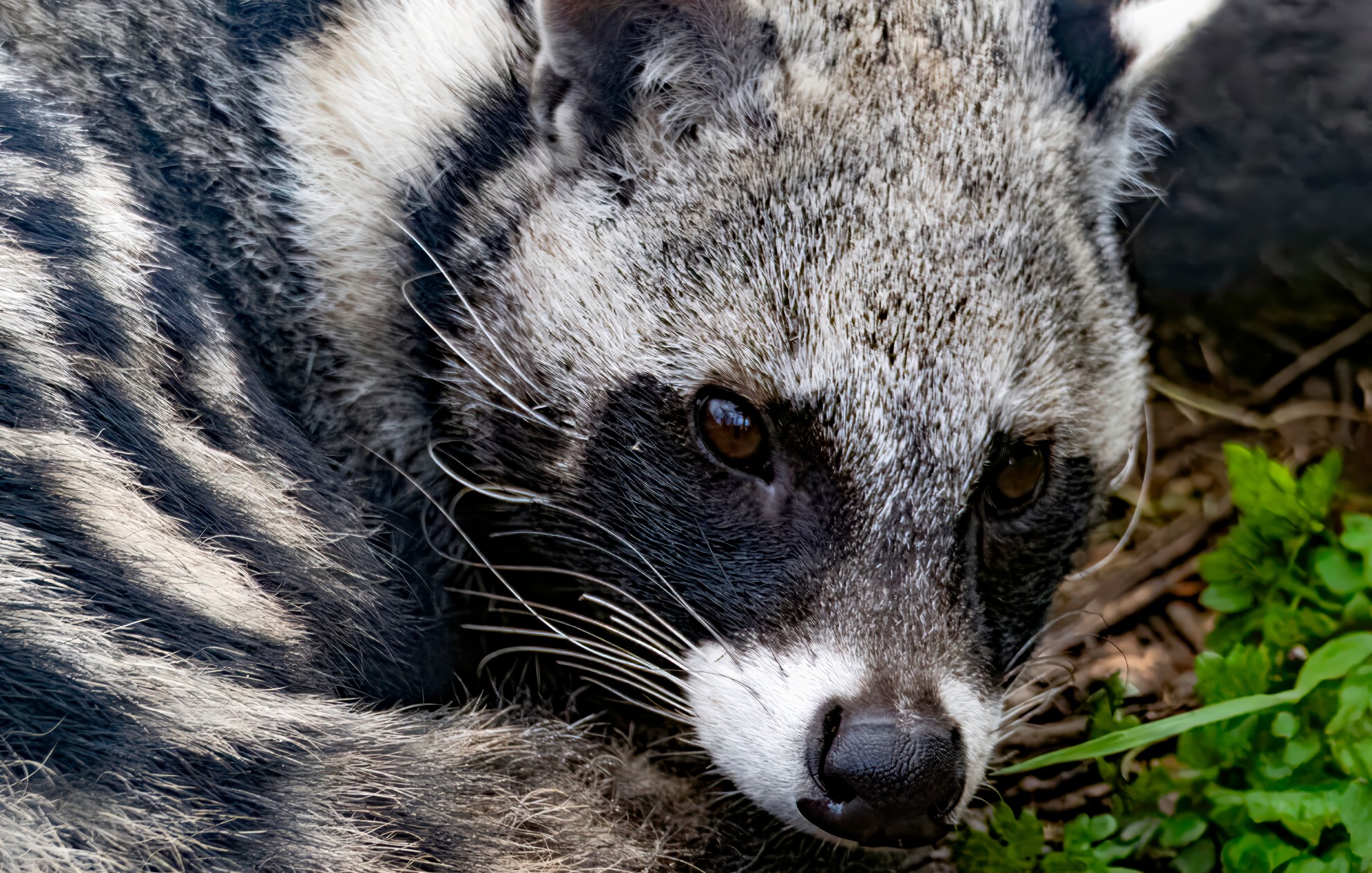
Even mammals like the African Civet (Civettictis civetta) use warning signals. It may not be brightly colored, but its bold black and white facial markings help it stand out at night. Combined with a powerful scent gland that produces a strong musky smell, it sends a clear message to predators to keep their distance. Civets are shy, nocturnal animals that spend their nights quietly moving through the bushveld, playing an important role in controlling insect and small animal populations.
At Likweti, we love this delicate balance of life that unfolds around us every day. Aposematic animals are simply part of the rich tapestry of the bushveld. Most of these creatures are not a danger to people and prefer to go quietly about their lives, adding color and character to the landscape. Their bold markings are just one of the many ways nature helps everything live side by side.
So the next time you notice the orange glow of a butterfly’s wings or the striking pattern of a grasshopper on a sun warmed rock, take a moment to enjoy it. In the bushveld, color is not only beautiful. It tells a story and adds to the quiet magic that makes places like Likweti so special